


Welcome
We are here to let the girls share their stories with us and our partner organization to share their stories for the world. It is a legit way to fight against against Taliban Oppressions.

#HeStandWithHer:
We proudly stand with the campaign #HeStandWith, as men unite to support women in their fight for basic rights. Together, we advocate for equality and empowerment, ensuring that every voice is heard and valued. It's time to stand up against Taliban extremism.

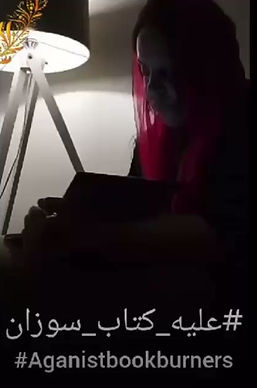
#Againstbookburner:We work to advance girls’ education and reading while condemning the Taliban’s systematic attacks on books, schools, and the right to learn


بغض های خفه شده در گلو
جهان غرق در گرمای آفتابیست که سیمای زرگونش بر بلندای آسمان خیره به زمین چشم دوخته است. به ساعت می نگرم حوالی ساعت ۱:۰۰ بعد از ظهر روز شنبه را نشان می دهد. وضویی می گیرم و نماز می خوانم و آماده رفتن به مکتب می شوم منتظر می ایستم تا ریحانه و خواهرش بیایند تا با هم به سوی مکتب برویم. چندی نگذشته است که صدای دروازه به گوش می رسد. بیک مکتبم را بر می دارم و با اشتیاق به سوی دروازه می روم و آن را می گشایم. هر سه با هم به راه می افتیم. اندک سخنی بین ما رد و بدل می شود در دلم چیز عجیبی حس میکنم از یک طرف آشوب و از سوی دیگر شوق اینکه امروز قرار است روی چوکی های نو مان نشسته و درس بخوانیم. با هر قدم به سوی دروازه مکتب نزدیک تر می شویم. با برداشتن هر قدم دلهره عجیبی سراسر وجودم را فرا می گیرد. حس میکنم کسی به ما نگاه می کند; به اطراف می نگرم. مردی پیش روی دروازه مکتب با یک کرولا آبی رنگ ایستاده و خیره به ما می نگرد؛ چندی همان طور باقی می ماند و سپس مسیر دیدگانش منحرف می شود. همه بدون هیچ حرفی به راه مان ادامه می دهیم تا اینکه ریحانه رشته سخن را می گشاید و می گوید:"امروز روز خوبی است. خیلی خوب! حس میکنم حس عجیبی از خوشحالی دوباره در من زنده شده است. فکر میکنم تک تک حجره هایم دوباره زنده شده اند و فریاد خوشحالی سر می دهند." هر دو به هم می نگریم و و با سکوت به طرف صنف گام بر می داریم. وارد صنف می شویم و با دیدن چوکی ها لبخند می زنیم و هر یک به سوی جاهایمان می رویم. هنوز در جاهای خود قرار نگرفته این که می گویند امروز بسیاری معلمان مثل هر روزغیر حاضر هستند. با خود می گویم، وقتی استاد نداشته باشیم دیگر این چوکی ها چه بدرد ما می خورند؟ به سوی دیگران می نگرم هر یک مصروف انجام کاری است: یکی در حال قصه، دیگری به تخته می نگرد و غرق در افکار خویش است. ساعت ها پی هم می گذرند و هر لحظه به زمان رخصتی نزدیک تر می شویم. ساعت آخر است، استاد وارد صنف می شود و طبق روال همیشگی همه به احترام استاد به پا می خیزیم. استاد بعد از چند کلمه صحبت درس را شروع میکند. فضای صنف چنان دلگیر است که حس میکنی تو را در جا خفه میکند. به سوی تخته می نگرم. جز کلمات درهم و پیچیده چیزی به چشم نمی خورد. سکوت صنف با ختم درس شکسته می شود و هرکدام وسایل مان را جمع کرده و به سوی دروازه خروجی حرکت میکنیم. چشمانم به دنبال دوستانم سرگردان هستند. به سختی میتوانم آنان را ببینند.آنها قبل از ما از صنف بیرون شده بودند. هنوز چند قدمی از صنف دور نشده ام که ناگهان به سرو صدای شاگردان صدای دیگری یکجا می شود و فضای مکتب را دگرگون می سازد صدایی ترسناک که در اول حس کردم که دیگر قادر به شنیدن نخواهم بود. چشمانم باز میکنم فضای مکتب دیکر همانند گذشته نیست حال فضای مکتب را هیاهوی شاگردان که از هر سو راه فرار را جستجو می کنند و شیشه های خرد شده که همه جا به چشم می خورد، فراگرفته است. به سختی می توانم حرکت کنم؛ هنوز آن صدا در گوشم هر لحظه تکرار می شود. دختری را در پهلویم می یابم که ترس از چشمانش پیداست دستش را می گیرم و او را با خود به گوشه یی می برم تا پنهان شویم. هر دو با چشمان اشک آلود به هم می نگریم. صدای نازکش را می شنوم که می گوید:"به زودی نوبت دیگر عزیزان مان هم می رسد و ما هم می میریم! این صحبت هر روزه ما است." هنوز حرفش تمام نشده بود که صدای انفجار دیگری همه جا را تکان می دهد گویا زمین لرزه ی بزرگی آمده است تا ما را با خود ببرد. صدایی را می شنوم با ترس به پشت سر می بینم. یکی از استادان را می بیمی بینم که به عجله دانش آموزان را جمع میکند تا از راه پشت سر مکتب به بیرون بفرستد. همه از ترس گام های بلند تر بر می داریم اما هنوز از مکتب خارج نشده ایم که صدای دیگری تکان مان می دهد. ناله ها و جیغ ها چند برابر می شود. به سوی دخترک می بینم کا سیل اشک از چشمانش جاریست, چیزی نمی گوید و فقط هق هق می گرید و با ترس به این طرف و آن طرف می نگرد. ترس از اینکه مبادا انفجار دیگری رخ دهد یا تروریستان به داخل مکتب بیایند و همه را با تیر گلوله از بین ببرند, همه ما را وا می دارد تا همه توان مان را جمع کنیم و سریعتر گام برداریم تا شاید بتوانیم نجات پیدا کنیم خود رابه چه رنج و سختی از مکتب بیرون میکنیم, همه با ترس به طرفی می دویم. ترس به اندامم لرزه می افکند و به سختی توان حرکت پاهایم را دارم. به کوچه مکتب می نگرم. آه! چه صحنه ای! دود فضا را غیر قابل تنفس ساخته و هر گوشه پر است از دخترانی که دیگر هیچگاه بیدار نخواهند شد و اما فقدان آنها زندگی را به عزیزان شان بسی سخت خواهد کرد. چشمانم دیگر توان دیدن را ندارد, بوی خون را می توان به راحتی استشمام کرد. دختران را می توان دید که در هرکه در هر سو افتاده اند یکی دست ندارد, دیگری پا, دیگری سر ندارد دیگر فقط پایش باقی مانده و همین طور صحنه هایی وحشتناک تر از این. واقعا که شاهد چنین بدبختی یی بودن دشوار تر از مرگ است. واقعا که ما چقدر انسان های بدبختی هستیم که بخاطر علم و دانش، اعتراض بخاطر داشتن استاد جزا می بینیم. خاطرات به ذهنم هجوم می آوردند و دیگر نمی توانم جلوی اشک هایم را بگیرم، آخر مگر می شود نگریست، بدبختی ازین بزگتر و زخمی از این عمیق تر مگر است؟ مات و مبهوت به هر سو می نگرم. اندکی آن طرف تر مردمانی را می بینم که هر لحظه برای انتقال دادن زخمی ها و اجساد به جمع شان افزوده می شود اما از پولیس و آمبولانس خبری نیست؛ انگار اینجا هیچ اتفاقی رخ نداده است و زندگی به روال عادی در جریان است. دولت با این کارش می خواهد نشان دهد که دیگر زندگی یک انسان به اندازه پشیزی هم ارزش ندارد چه بحث زندگی یک انسان باشد و چه هم بحث زندگی ۷۰۰۰ انسان. مگر آیا وحشتناک تر از این هم می تواند وجود داشته باشد؟ اکنون که این مقاله را می نویسم، به سختی می توانم بنویسم دستم دیگر توان نوشتن را ندارد؛ عمق این فاجعه به حدی وحشتناک بود که حتی فکر کردن به آن هم لزره بر جان آدمی می افکند. هنوز سخنان دختر در گوش هایم طنین انداز هستند که می گوید:"به زودی نوبت دیگر عزیزان ما هم می رسد و ما می میریم. راست می گوید ما همه منتظر مرگ مان هستیم ولی صبر کردن تا مردن که دیگر نامش زندگی نیست!" آنچه دردناک است این است که این فقط گوشه ای از فاجعه هایی است که هرروز شاهدش هستیم. وقتی خاطرات و چشم دید های آن روز به من هجوم می آورند، درد جانکاهی را حس میکنم و می خوام بگریم اما غمگین تر از آنم که بگریم. فکر می کنم به بن بستی برخورده ام که نه توان فراموش کردن آن را دارم ونه هم توان فکر کردن؛ اما با خود می گویم که همه چیز می گذرد اما فراموش هرگز نه می شود و نه خواهد شد. واقعا که تجربه زندگی در جنگ ترس، وحشت، ناامنی و انتحار به مراتب دشوار تر و وحشتناک تر از شنیدن و خواندن چنین تجربیات است. با آنهم: درخت پیر تن من دوباره سبز می شود که زخم هر شکست من، حضور یک جوانه شد درخت پیر تن من، دوباره سبز می شود هر چه تیر زدی مرا،زخم نشد جوانه شد ۸ می، ۲۰۲۱
Open Letter to Mr. Ghani

It is with profound uncertainty that I commence this address, uncertain whether to extend a salutation—traditionally a harbinger of peace, contrary to the affliction you bestowed upon us. Yet, an inner conviction advises against it, given the pressing grievances that demand attention. Do you recall the significance of this day? Two years prior, on 24 Asad—or 15 August by your calendar—merely four days before the independence of a realm known as Afghanistan, a nation you proclaimed to govern, vowing eternal allegiance. Had you, in those moments, identified as a devoted patriot eagerly anticipating Independence Day celebrations, or as a conscientious journalist, voice trembling at Kabul’s fall and head bowed in shame at the closure of schools to girls; had you considered the innocent children facing an uncertain future, the parents consoling themselves with memories of martyred children; had you prioritized national sentiment over political games—how different it might have been! Alas! Do you recollect the days since you relinquished the capital to a band of terrorists? Permit me to remind you: 583 days, 13,992 hours, 839,520 minutes, 50,371,200 seconds—and countless moments of misery and despair. Each passing moment relegates us further in the march of life, risking our reduction to forgotten footnotes in history, branded with ignominy and identity loss. I ponder your state since that day, as we daily confront our consciences in a self-imposed tribunal, seeking to discern our errors—if any were committed—wandering in search of our most precious gift: hope. Joy has departed, smiles have vanished from our once-lively land, and our streets, bereft of past vibrancy, are now populated by those devoid of humanity—perhaps the discontented brethren of Mr. Karzai! Let us proceed, for you may not recall those times, though I vividly remember the day we, invited by the National Olympic Federation to the Arg, met the “President” of our nation—filled with anticipation, now tinged with a complex blend of joy and regret, devoid of forgiveness, as time and events compel a stark reevaluation. No amount of written lament can suffice; even if pens ran dry and volumes were filled, justice for our plight would remain elusive. Neither your televised justifications nor your condolences can heal this wound. I leave you with a poignant reflection from the esteemed Afghan author Khaled Hosseini, whose writings pierce the heart in these days of exile, narrating our tragic history: “Only one sin exists in the world, only one: theft. When you kill a man, you steal his life; you rob his wife of a husband, his children of a father. When you lie, you steal the right to truth; when you deceive, you steal justice.” With wishes for an awakened conscience! Zahra Ahamdi
طالبان آمدند!

جلمهای که تمامِ زندگیم را دگرگون کرد، همان گونه که زندگی تمامی مردم قریه را دگرگون میکند. خواب بودم، بیدارم کردند و گفتند: طالبان آمده است. باید جایی پنهان شوم. جایی که نتوانند مرا پیدا کنند. سال پیش که طالبان ولسوالی پهلو را سقوط دادند، شنیدیم که تعدادی از دخترانِ جوان را با خودشان بردند و برای خود نکاح کردند. پسران جوان را به جنگ روانه کردند. پدرم میترسید دوباره چنین کاری را کنند، به همین خاطر مرا در گاو خانهای پنهان کرد. مکانی که جای انسان نیست. آنجا گاوها نگهداری میشود. همه جایش بوی سرگین گاو میدهد. آنجا نفسم بند آمده بود، نمیدانستم باید تا چه زمانی اینجا باشم. تمامی غذایی که داشتم، سهعدد کچالوی جوشیده بود. در مشتم محکم گرفته بودم. آنقدر این کچالوهای مسکین را از ترس و تشویش فشُردم که دیدم بیشترین قسمتهایش نرم شد. صدای مرمی از همه سو بهگوش میآمد. یکی از افراد طالبان خطاب به کسی میگفت: مگر تو دختر و پسر جوان نداری؟ کجا هستند بگو کجا پنهان کردهای؟ سلاحت کجاست؟ میگویی یا به فرقت بزنم؟ دیگری میخواست داخل گاوخانه را بپالد. همین که سه قدمی داخل آمد؛ گفت: اینجا دیگر کجاست، چون گورستان تاریک است، فکر نکنم هیچ جانوری اینجا را تحمل بتواند. شاید خدا بر من رحم کرد که مرا نیافت. سه ساعتی گذشت، و دیگر نه صدای فیر مرمی و نه صدای آدمی میآمد. با خود گفتم: حتما رفتهاند، حالا باید بروم خانه. بیرون شدم و به سوی حویلیمان دویدم، همین که پا به دروازه حویلی گذاشتم، پدرم را دیدم که در خون افتاده و برادر شش سالهام گریهکنان بر بالینِ پدرم ایستاده و فریاد میکشید. طفلکی برادرم رنگش پریده بود. بسویش دویدم، دیدم پدرم را کشتهاند. با صدای لرزان پرسیدم: لالا مادر کجاست؟ درست نمیتوانست آن طفلِ کوچک حرف بزند. فقط گفت: دادا بردند. معلوم دار بود، مادرم را با خودشان برده بودند. برادری هژده سالهام را نیز برده بودند. پدرم را کشتند و این طفل مسکین را اینجا رها کردند. دیگر هیچ حسی نداشتم. نه خوب نه بد. درست شبیه مردهها خودم را حس میکردم. به دیوارهای ویران نگاه میکردم که شبیه گورستانهای تیکه تیکه بود. وای بهحال من، وای بهحالِ برادر کوچکم که هردو زنده در گورستانی دفن گشتهایم. لعنت به جنگ نویسنده
"Every individual has the right to determine their attire, free from external dictates," she asserts. Nevertheless, as a girl, Yalda finds herself stripped of these rights. Weeping, she continues "At times, I wish I hadn't been born a girl in Afghanistan." Yalda Yalda, age 17, rarely leaves her home due to the strict and oppressive policies enforced by the Taliban upon women and girls in Afghanistan. On occasion, when essential tasks arise such as a visit to the doctor, her mother accompanies her outside. Yalda's existence now revolves around the walls of her house and its courtyard. However, within this constrained space, she has built herself an expansive world using books and technology. The internet and technology have afforded her the opportunity to immerse herself in movies, podcasts, educational programs focusing on computer science and philosophy, two fields she holds dear. Even prior to the Taliban's rule, Yalda struggled with anxiety and stress. Taliban’s return and being deprived of education only amplified her inner turmoil, leaving her feeling unsettled with darkness of depression creeping in. Over time, with the support of her family, particularly her mother, and her own research into depression and coping mechanisms, her mental state gradually improved. Yalda was in ninth grade when the Taliban regained power by force in 2021. Throughout the past two years of the ban on education, she turned to self-study. Books, a laptop, and a mobile phone became Yalda's sanctuary, rendering the daunting circumstances inflicted by the Taliban somewhat bearable. Having previously acquired elementary English skills at a private language center, she embarked on self-directed English learning, ultimately attaining an advanced level. Presently, most of her reading materials, movies, and podcasts are in English. Yalda's social interactions have transitioned from the physical realm to the virtual sphere, maintaining contact with friends through social media messaging applications. She has transformed these group interactions into learning opportunities for herself and her peers, establishing a book club where members summarize and discuss their readings. Philosophy holds a particular fascination for Yalda, prompting her aspirations to pursue it at university. She has already commenced reading philosophical works and follows coding tutorials on YouTube. Additionally, she has recently gained admission to an online program offered by a prestigious Afghan university. She awaits the commencement of her classes. For Yalda's safety, details regarding her university and online education program remain undisclosed. Despite pledges of the Taliban's Ministry of Education that the ban on education for girls beyond the sixth grade would be temporary pending curriculum revisions aligned with Islamic law and Afghan culture, no action has been taken to reopen girls' schools over two years later. Even in the event of schools reopening for girls beyond the sixth grade, Yalda is not optimistic. She fears the Taliban's radical changes to the curriculum. She states, "Real Islam differs significantly from Taliban’s Islam. Yet, the Taliban seek to dictate/introduce their own interpretation of Islam into the curriculum." Yalda believes in the right to individual free will, and strongly opposes the imposition of lifestyle and dress codes by others. She perceives the actions of the Taliban undermine individual freedoms and free will. Having experienced firsthand the repercussions of such Taliban-dictated rules, solely due to her gender, Yalda regards the freedom to exercise one's will as paramount. "Every individual has the right to determine their attire, free from external dictates," she asserts. Nevertheless, as a girl, Yalda finds herself stripped of these rights. Weeping, she continues "At times, I wish I hadn't been born a girl in Afghanistan." Despite all the adversities, Yalda hopes to get a scholarship and continue her studies in her favorite field outside of Afghanistan.
“We pretended to be boys so we could attend classes”, Aisha and Marwa When the Taliban seized control of the country, Aisha and her sister Marwa were tenth and ninth-grade students, respectively, both excelling in their studies. The day the Taliban announced their ban on girls' education beyond sixth grade, that night both sisters wept until the dawn. The denial of education left them both heartbroken and ill in bed. Their elder sister, who had completed her university education before the Taliban's return and was employed in a private media outlet, enrolled them in an English language learning center to uplift their spirits. Through language classes and engaging in handicrafts temporarily, their mental well-being gradually improved. However, their newfound happiness was short-lived. In late 2021, the Taliban also closed private educational centers for girls, once again plunging Aisha and Marwa into despair. The Taliban's stance regarding girls' education in private educational centers is not uniform across all regions and may vary from one province to another. In some areas, the group has allowed private educational centers to teach girls above the sixth grade without official orders. However, in some areas, like Aisha and Marwa’s hometown, the Taliban have forbidden girls from attending private educational centers too. Left with no other option for their thirst of gaining education, Aisha and Marwa decided to disguise themselves as boys and attend English language classes. This time, by wearing their brother's clothes and pretending to be boys, they returned to the educational center from which they had previously been expelled for being girls and sat in the English language class. Aisha recounted, "We were scared, but we went to the school office and registered under the names of Ahmad and Mahmood. And we were seated in the boys' class." Their little tactic to be able to access education, their most basic right, was soon enough to be discovered by the center’s manager. "One day the manager of the center called us to his office. Seeing us dressed as boys, his voice trembled and started crying. We cried too. They told us to ensure no one learns about this so we can continue our studies." Marwa remembered. Aisha and Marwa's classmates persisted in being curious as to why the two always came to class with their hats and masks on. Some of their classmates ridiculed them, mocking their girlish voices. Eventually, one day, one of the teachers asked Aisha to remove her hat, but she did not. From that day on, their classmates understood that they were not Ahmad and Mahmood but Aisha and Marwa. Despite facing mockery and bullying by some of their classmates, the two remained resolute to continue their English language class until the end. After the class, Aisha and Marwa's lives have been restricted to the confines of their home. Aisha draws, and Marwa weaves handicrafts. During these activities, they occasionally review their past lessons to alleviate the boredom and anguish of being prisoners at home. The attempts of Afghan girls concealing themselves as boys to receive education are not unprecedented in history. In the previous Taliban era, too, girls used to wear male attire just to be able to leave their house and often earn a living. During the first rule of the Taliban, girls and women faced a similar situation, banned from learning and working. It is unfortunate to see the same situation occur one more time and young women like Aisha and Marwa, who once were the top in their class and determined to pursue their higher education are now confined to their homes. Note: We use AI to translate the farsi to English. Do you recall the significance of this day? Two years prior, on 24 Asad—or 15 August by your calendar—merely four days before the independence of a realm known as Afghanistan, a nation you proclaimed to govern, vowing eternal allegiance. Had you, in those moments, identified as a devoted patriot eagerly anticipating Independence Day celebrations, or as a conscientious journalist, voice trembling at Kabul’s fall and head bowed in shame at the closure of schools to girls; had you considered the innocent children facing an uncertain future, the parents consoling themselves with memories of martyred children; had you prioritized national sentiment over political games—how different it might have been! Alas! Do you recollect the days since you relinquished the capital to a band of terrorists? Permit me to remind you: 583 days, 13,992 hours, 839,520 minutes, 50,371,200 seconds—and countless moments of misery and despair. Each passing moment relegates us further in the march of life, risking our reduction to forgotten footnotes in history, branded with ignominy and identity loss. I ponder your state since that day, as we daily confront our consciences in a self-imposed tribunal, seeking to discern our errors—if any were committed—wandering in search of our most precious gift: hope. Joy has departed, smiles have vanished from our once-lively land, and our streets, bereft of past vibrancy, are now populated by those devoid of humanity—perhaps the discontented brethren of Mr. Karzai! Let us proceed, for you may not recall those times, though I vividly remember the day we, invited by the National Olympic Federation to the Arg, met the “President” of our nation—filled with anticipation, now tinged with a complex blend of joy and regret, devoid of forgiveness, as time and events compel a stark reevaluation. No amount of written lament can suffice; even if pens ran dry and volumes were filled, justice for our plight would remain elusive. Neither your televised justifications nor your condolences can heal this wound. I leave you with a poignant reflection from the esteemed Afghan author Khaled Hosseini, whose writings pierce the heart in these days of exile, narrating our tragic history: “Only one sin exists in the world, only one: theft. When you kill a man, you steal his life; you rob his wife of a husband, his children of a father. When you lie, you steal the right to truth; when you deceive, you steal justice.” With wishes for an awakened conscience! Zahra Ahamdi
Sama for resistance: Parwana does not give in to the Taliban Parwana was 15 when she was deprived of going to school under the Taliban’s regime, which took power back in August 2021 in Afghanistan. At such a young age, Parwana started to stand against the regime’s restrictions on Afghan women by recording herself dancing Sama and posting it on social media. For her safety, we use Parwana as her pseudonym and an AI-generated photo as her image in this feature article. The Sama dance, also called Sufi whirling, is a spiritual practice associated with the Mevlevi Order in Sufism. Practitioners, known as dervishes, perform circular spins symbolizing a mystical journey toward spiritual enlightenment. While women in Afghanistan are deprived of their basic rights, such as choosing what to wear, going out in public freely, studying, and working, Parwana began to dance Sama in public to criticize the restrictions on herself and millions of other women in Afghanistan. Following threats from unknown sources and the Taliban, she did not stop but turned to an alternative: recording herself dancing while covering her face and posting her videos on social media through media outlets. “It is really hard to do it here. After sharing my videos on social media, it has a lot of problems and challenges for me,” she describes how she was impacted by the threats. Schoolgirls in Afghanistan, including Parwana, who are now imprisoned in their homes, have started to spend their days learning new skills and thinking of pursuing a different path for their dreams and passions. An Afghan girl, wearing a traditional dress, breaks the chains on her feet and dances Photo courtesy of Parwana | Submitted to HerStory Parwana was 17 when she discovered her passion for photography. Soon, she found herself in this beautiful art as a skillful photographer, using photography to showcase the unseen beauty of Afghanistan and Afghan women to the world. “At first, I started photography as my hobby, but after some time, I realized I was not doing this for myself anymore. I am doing it for my people,” committing to capturing things through the lens of her camera that often goes unnoticed in Afghanistan. Parwana stresses that the difficult circumstances and moments that millions of Afghan girls and women are going through should be captured. “I think with myself that there should be someone who captures these moments to show the world the lives of millions of girls at this time—that women and girls are still doing [their best] with this much pain and this much problem.” Parwana tries to reach out to as many girls as possible to talk to them, listen to what they have to say, and bring it to life through her camera. An Afghan girl holding a photo of her drawing Photo courtesy of Parwana | Submitted to HerStory The photos she takes go into her photo collection called "Egyptian Lotus," which implies the concept of flowers growing up in swamps—comparing Afghan girls to flowers that have to live under difficult circumstances. As Parwana grows, she learns more about herself, and life, and shapes her beliefs by exploring different books from well-known authors. “When I read those stories, I think that if they could survive those times, then maybe I can too,” adds Parwana after sharing that she has been reading narratives and stories of Afghan women under the first period of the Taliban regime back in the 1990s. Khaled Hosseini, Lillias Hamilton, Elif Shafak, and Michelle Obama are some of her favorite authors. For Parwana, it is highly significant to keep her dreams alive and not give up despite all the challenges she and her fellows are facing in Taliban-controlled Afghanistan. “My dreams are very important to me, and I will do anything to achieve them, I know that one day I will have a speech at the United Nations, and I will talk about all of these women and say that I am only a teenage girl, and what is happening is not fair.” In her last statement in the interview with HerStory, Parwana stresses again the importance of continuing to introduce Afghan women to the world, “I want to show that women and girls in Afghanistan are so beautiful—their dresses, their hair, their homes, and all of their traditions—but at this time, they’re all trapped in their homes.”